The Ultimate Guide to Things to Do in Volcano, Hawaii
Your Big Island Basecamp for Adventure, Culture & Natural Wonder
Volcano, Hawaii sits at 3,750 feet elevation at the gateway to Hawaiʻi Volcanoes National Park, surrounded by a living, breathing rainforest unlike anything else in the United States. Staying at Volcano Rainforest Retreat puts you at the center of it all — within minutes of lava fields, lush hiking trails, locally made wine, world-class art, and one of the most culturally rich communities on the Big Island.
Whether you’re here for a long weekend or a full week, this guide covers everything you need to know about what to do in Volcano, Hawaii — from iconic natural landmarks to farmers markets, galleries, waterfalls, and beaches that most visitors never find.
1. Hawaiʻi Volcanoes National Park
The reason most visitors come to Volcano is also the reason most of them stay longer than planned. Hawaiʻi Volcanoes National Park is a UNESCO World Heritage Site and International Biosphere Reserve spanning over 500 square miles of active volcanic terrain, ancient lava tubes, steam vents, and native rainforest.
Must-Do Experiences Inside the Park:
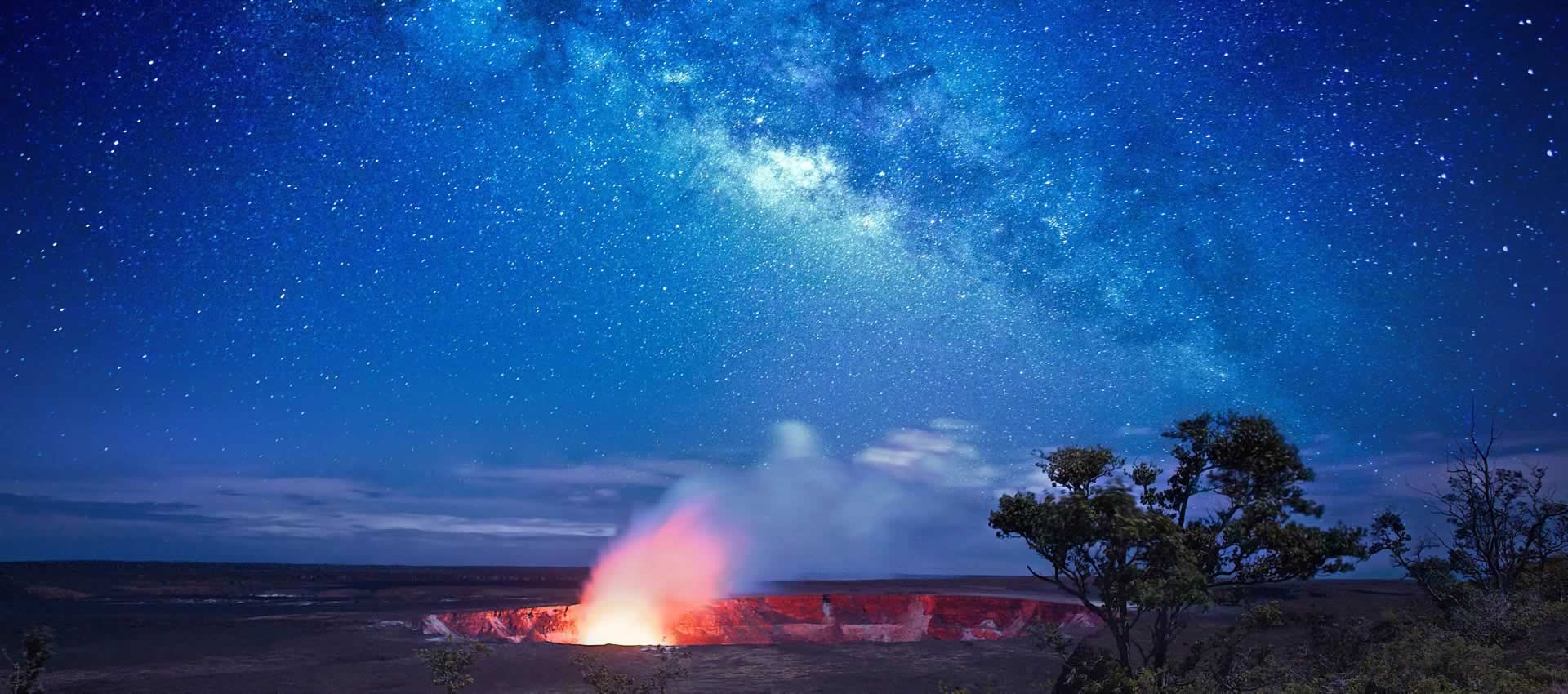
Halemaʻumaʻu Crater — The summit caldera of Kīlauea. Visit after dark on active eruption nights to watch the lava glow illuminate the sky in a way no photograph fully captures. Check the NPS alerts page before heading out, as volcanic activity shifts frequently.
Kīlauea Iki Trail — A 4-mile loop that descends through rainforest and across the floor of a cooled lava lake. One of the most spectacular and accessible hikes on the entire island.
Nāhuku / Thurston Lava Tube — Walk through a centuries-old tunnel formed by flowing lava that once moved beneath the earth’s surface. Available during daylight hours and into the evening; bring a headlamp for after-hours exploration.
Chain of Craters Road — A dramatic, winding drive from the summit down to the coast through miles of lava flows, past petroglyphs, overlooks, and sections of road swallowed by past eruptions.
Puʻu Loa Petroglyphs — A short 1.4-mile round-trip walk across lava fields leads to one of the largest petroglyph fields in Hawaiʻi, with over 23,000 ancient carvings.
Mauna Loa Trail Access — The park provides the primary trailhead for Mauna Loa, the world’s largest volcano by mass. Day hikes and multi-day summit expeditions both depart from here. Elevation gain is significant — plan and prepare accordingly.
Devastation Trail — An easy, paved walk across a cinder field with views into the 1959 Kīlauea Iki eruption zone. Also one of the best nighttime vantage points for crater glow.
Pro tip: The Volcano House Restaurant overlooks Halemaʻumaʻu Crater directly — breakfast or dinner with an active volcano as your backdrop is an experience worth building your schedule around.
2. Volcano Village: Art, Markets & Local Culture
Volcano Village has long been a gathering point for working artists, writers, and craftspeople drawn to the cool climate, creative quiet, and deep connection to Hawaiian land and culture. The village itself is as much a destination as the national park next door.
Sunday Farmers Market Every Sunday from 6:00 a.m. to 10:00 a.m., the Cooper Center on Wright Road hosts the Volcano Village Farmers Market — the social heartbeat of the community. Arrive early; the best vendors sell out fast. Expect locally grown tropical produce, freshly baked breads, Big Island coffee, honey, grass-fed beef, poi, jams, handmade crafts, and orchids. This is not a tourist market — it’s where residents shop, and that’s exactly what makes it worth setting your alarm for.
Thursday Night Market Every Thursday from 3:00 p.m. to 6:00 p.m., also at the Cooper Center, the evening market shifts the focus toward prepared foods, food trucks, and local artisans. It’s a relaxed, communal gathering that gives visitors a genuine look at Volcano Village life beyond the national park.
Second Sunday Market at Volcano Winery On the second Sunday of each month, Volcano Winery hosts a midday market from noon to 4:00 p.m. — a natural pairing of local vendors, prepared foods, and afternoon wine tasting in one of the most unusual tasting rooms in the country.
Volcano Art Center Volcano has two Volcano Art Center locations, and both are worth your time. The gallery inside Hawaiʻi Volcanoes National Park is housed in the historic 1877 Volcano House building and displays rotating exhibitions by local and island-based artists working in ceramics, photography, painting, fiber, and woodwork. The Niaulani Campus in Volcano Village hosts classes, workshops, music performances, poetry readings, and a guided Monday morning nature walk through old-growth rainforest that is open to the public.
Art Galleries & Studios Beyond the Art Center, Volcano Village has a thriving gallery scene. Volcano Garden Arts, set on the historic Hopper Estate, combines an art gallery, artists’ studios, lush gardens, and Cafe Ono — a beloved lunch spot known for fresh, organic dishes. The 2400 Fahrenheit glass art studio is another standout, where you can watch glass art being created and browse the gallery on-site.
3. Volcano Winery & Golf Course
Volcano Winery Located just off Highway 11 at mile marker 30 on Piʻimauna Drive, Volcano Winery is the southernmost winery in the United States — and one of the most distinctive anywhere. Tastings feature grape varietals grown on-site alongside tropical fruit wines and a standout macadamia nut honey wine that draws visitors back year after year. They also grow and sell their own tea, making the gift shop a worthwhile stop. The tasting room is unhurried, with a rainforest backdrop that makes the whole experience feel removed from the rest of the world.
Volcano Golf Course Volcano Golf & Country Club offers an 18-hole course at 4,000 feet elevation — one of the most unusual places to play golf on the planet. Mauna Loa and Mauna Kea serve as the backdrop on clear days, and the cool, misty climate is a welcome contrast to the heat of the coast. It’s a full-regulation course open to the public. Bring a jacket.
4. E-Bike Tours Through the Rainforest & Park
E-bike tours based out of Volcano Village give visitors a low-impact, high-reward way to cover significant ground through the national park and surrounding rainforest. Tours typically cover crater overlooks, lava fields, forest trails, and village roads that would take hours on foot — ideal for visitors who want to experience the landscape without a full day of strenuous hiking.
5. Black Sand Beach & Green Sand Beach
The southeastern coastline of the Big Island offers two of the most visually striking beaches in the Pacific, and both are within easy reach of Volcano.
Punaluu Black Sand Beach — 30 Minutes South Punaluu’s jet-black sand is formed from basalt lava cooled rapidly by the ocean, and the beach is one of the most visited on the island for good reason. Hawaiian green sea turtles (hōnubackōlea) rest on the shore regularly — give them space and enjoy the view. Pair the stop with a visit to Punaluu Bakeshop nearby, famous for its malasadas and Hawaiian sweetbreads.
Papakōlea Green Sand Beach / Mahana Beach — 1 Hour South One of only four green sand beaches in the world, Papakōlea sits at the southernmost point of the United States in the Kaʻū district. The beach’s distinctive olive-green color comes from olivine crystals eroded from the surrounding cinder cone. Getting there requires a 2.5-mile walk each way across open lava fields, or an arranged ride in a local 4WD vehicle from the trailhead. Bring water, sun protection, and sturdy shoes. The effort makes the arrival feel earned.
6. Day Trips to Hilo: Waterfalls, Gardens & Bay Life
Hilo is approximately 30 miles north of Volcano — about 45 to 50 minutes by car — and offers one of the most authentically Hawaiian urban experiences on the island. Rain-fed and lush, the city sits on a beautiful bay and overflows with things worth seeing.
Akaka Falls State Park A 442-foot waterfall plunges into a vine-draped gorge in one of the most dramatic natural sights on the Big Island. An easy 0.4-mile paved loop trail winds through native Hawaiian rainforest of bamboo, ginger, and heliconia. Open daily roughly 8:30 a.m. to 6:00 p.m.; $5 per person entry (parking is additional). Budget 30 to 60 minutes for the full loop.
Rainbow Falls (Waianuenue) Minutes from downtown Hilo, this 80-foot waterfall drops into a natural pool surrounded by wild ginger. On sunny mornings, the mist creates vivid rainbows above the falls — arrive before 10 a.m. for the best light. Free to enter, with a short walkway from the parking area directly to the viewing platform.
Hawaiʻi Tropical Botanical Garden Located along the Hamakua Coast just north of Hilo, this 40-acre garden contains over 2,000 species of tropical plants perched above Onomea Bay. Towering palms, bromeliads, heliconias, and streams running toward the ocean make it one of the most biodiverse and peaceful walks on the island.
Liliʻuokalani Gardens The largest authentic ornamental Japanese garden outside of Japan sits along Banyan Drive on the edge of Hilo Bay. Dedicated in 1917 as a tribute to Hawaiʻi’s early Japanese immigrant community, the 24-acre garden features stone lanterns, koi ponds, arching bridges, and sweeping bay views. Admission is free.
Hilo Beach Parks: Carl Smith, Richardson’s & Onekahakaha Hilo’s beach parks are local favorites. Richardson’s Ocean Park offers snorkeling with regular sea turtle sightings and a natural lava tide pool area. Onekahakaha has calm, protected swimming in a sandy lagoon — great for families. Carl Smith Beach Park is quieter and tree-shaded, ideal for a picnic or an easy swim. All three are within minutes of downtown Hilo, all free to enter.
7. More Worth Your Time
Akatsuka Orchid Gardens — On Highway 11 between mile markers 22 and 23, this is one of the largest orchid operations in the state, with over 200,000 plants in a 13,000-square-foot showroom. Self-guided tours are free. Guided tours include a hands-on transplanting experience and a souvenir orchid to take home.
Volcano Tea Farm — Near the Volcano Winery, a working tea farm offers tours and tastings. The cool, misty climate of the Volcano area produces varieties unlike anything grown on the mainland.
Helicopter Tours — For an aerial perspective on Kīlauea’s caldera, lava fields, and coastline, helicopter tours depart from Hilo. The scale of the craters, flows, and rainforest canopy looks entirely different from above.
Puʻu Makaʻala Natural Area Reserve — Over 18,000 acres of native ʻOhiʻa and hapuʻu fern forest bordering Volcano Village to the north, accessible via Wright Road. A 4WD vehicle is helpful for reaching the trailhead.
Stargazing — At 3,750 feet with minimal light pollution, Volcano offers exceptional stargazing on clear nights. The Milky Way is visible with the naked eye. Step outside after midnight for the best views.
Plan Your Stay at Volcano Rainforest Retreat
Volcano, Hawaii rewards visitors who slow down, stay longer, and go beyond the familiar. The national park is extraordinary — but so is the Sunday market at sunrise, a glass of macadamia honey wine at dusk, a morning at the art center, or the drive south to a beach made of green sand at the edge of the continent.
Volcano Rainforest Retreat is your home base for all of it. We share this guide with every guest because the best trip you’ll have here is one where you feel like a local, not a tourist.
Questions about any of these experiences? We’re happy to help you plan. The front door is always open.
